
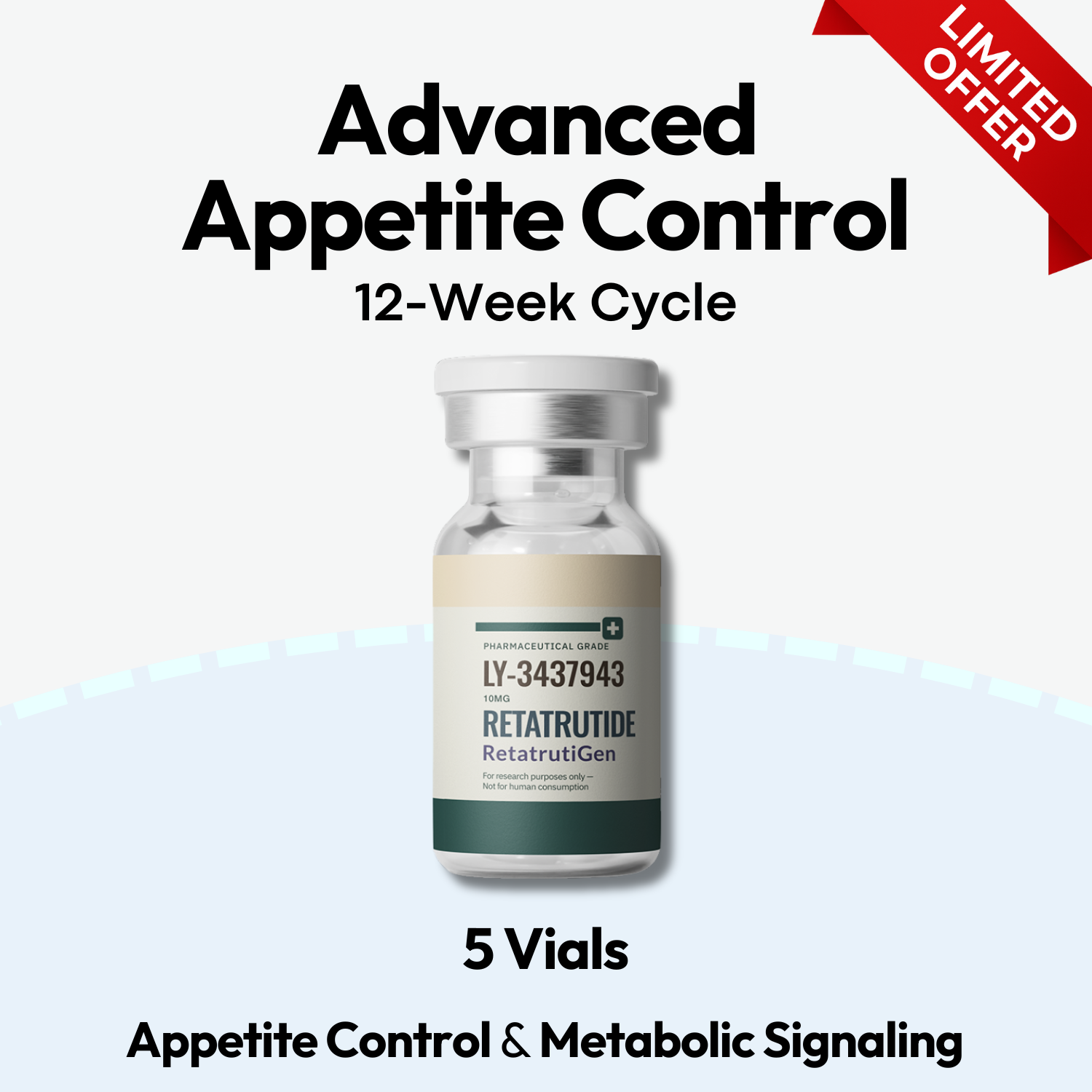
The Appetite Control Research Stack (Retatrutide) is an advanced, multi-pathway formulation selected by research teams investigating complex metabolic control and appetite regulation within structured experimental models. This stack is designed to support exploration of coordinated incretin and metabolic signaling through simultaneous GLP-1, GIP, and glucagon receptor activity, offering a broader and more integrated research framework than earlier appetite-focused stacks.
By introducing triple-pathway signaling, this formulation enables deeper investigation into how layered metabolic mechanisms interact under controlled laboratory conditions.
Includes
- 5 vials of Retatrutide (10 mg each)
Retatrutide is studied in metabolic research for its combined activity across three key receptor pathways associated with appetite regulation and energy balance. By engaging GLP-1, GIP, and glucagon receptors simultaneously, this compound allows research teams to examine how multi-receptor incretin signaling influences appetite-related pathways, metabolic throughput, and energy regulation in a coordinated manner.
This stack is positioned for advanced research scenarios where foundational single- and dual-pathway data has already been established, allowing for more complex signaling dynamics to be explored without introducing unrelated compound classes.
This stack is positioned at the Advanced level within the Appetite Control research framework. It is intended to follow both single-pathway and dual-pathway incretin stacks, serving as the highest tier in appetite-focused metabolic research before branching into body recomposition or non-incretin metabolic stacks. Data generated at this stage is commonly used to inform cross-category progression decisions in broader metabolic research programs.
Mechanism and Research Focus
Retatrutide is investigated for its interaction with GLP-1, GIP, and glucagon receptors, each of which plays a distinct role in appetite signaling and metabolic regulation. In controlled research environments, coordinated modulation of these pathways has been associated with observable changes in satiety-related signaling markers, energy expenditure indicators, and metabolic output profiles. The simultaneous engagement of these receptors provides a comprehensive platform for studying integrated metabolic control within standardized experimental frameworks.
Key Research Observations
Research has shown this stack may help support the following in non-clinical models:
- Triple-pathway incretin signaling — coordinated GLP-1, GIP, and glucagon receptor activity
- Advanced appetite regulation markers — complex satiety and hunger signaling patterns observed in structured models
- Metabolic output indicators — measurable shifts in energy-related biochemical readouts
- Integrated response profiling — comprehensive data sets enabling comparison across incretin progression stages
Form and Handling
Research-grade peptide supplied in lyophilized powder format. Vials are provided individually and aligned to the stack composition. Store frozen at approximately −20 °C and protect from light to preserve compound stability throughout the research period.
Research Use Only
For laboratory research use only. Not for human or animal consumption, medical use, or therapeutic application.



Reviews
There are no reviews yet.