
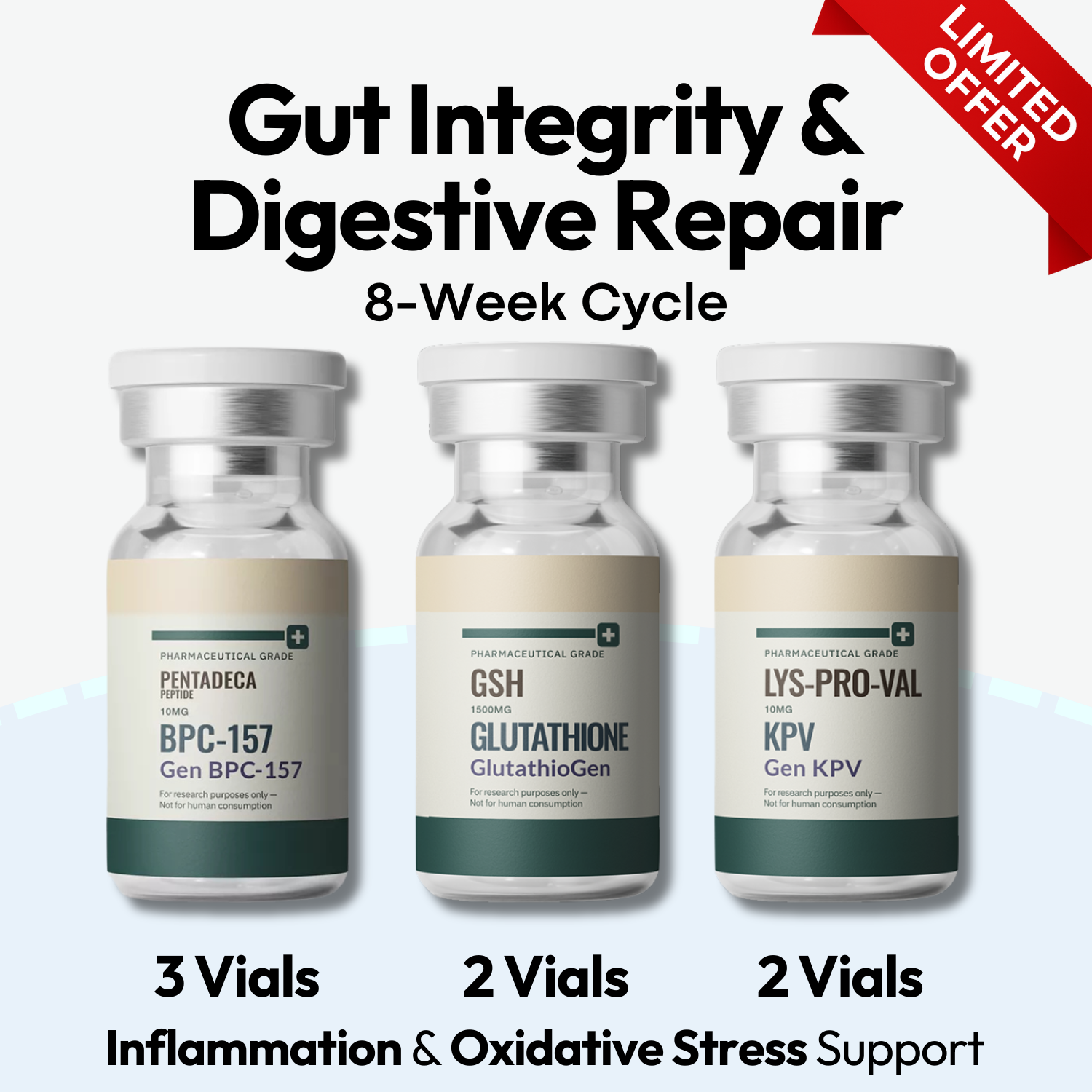
The Gut Barrier & Digestive Repair Research Stack (BPC-157, KPV, Glutathione) is an advanced formulation selected by research teams investigating gastrointestinal barrier integrity, inflammatory signaling modulation, and oxidative stress management within controlled experimental models. This stack is designed to support comprehensive exploration of gut-focused repair mechanisms at both the tissue and cellular level.
By combining structural repair peptides with redox and inflammatory signaling modulators, this formulation provides a multi-pathway framework for digestive system research.
Includes
- 3 vials of BPC-157 (10 mg each)
- 2 vials of KPV (10 mg each)
- 2 vials of Glutathione (1500 mg each)
- BPC-157 is widely researched for its potential to support tissue repair and integrity within the gastrointestinal lining.
- KPV is studied for its role in modulating inflammatory signaling pathways relevant to digestive tissues.
- Glutathione is examined for its central function as a master antioxidant, crucial for managing oxidative stress at the cellular level.
The combination creates a multi-pathway research model designed to study gut health in a comprehensive way. This approach is structured to investigate how three distinct supportive mechanisms might work together, rather than in isolation.
The research framework is built on the following logic:
- Foundational Repair: The model first investigates supporting the physical repair of the gut lining, the essential barrier that controls what enters the body from the digestive tract.
- Environmental Modulation: Concurrently, it examines the modulation of local inflammatory signaling. This focuses on the chemical environment surrounding the gut tissue, aiming to support a balanced state conducive to repair.
- Cellular Support: The model also integrates the management of oxidative stress at the cellular level. This involves studying the support of the antioxidant systems that protect gut cells from damage during normal metabolic processes and repair activities.
The core of this research model is the study of the interaction between these pathways. The hypothesis is that they are synergistic: supporting the structural barrier may be more effective when the inflammatory environment is balanced, and both processes may be enhanced when cells are protected from oxidative stress. This integrated perspective allows for the study of gut barrier function and resilience as a dynamic system influenced by multiple, simultaneous factors.
Mechanism and Research Focus
This stack enables research into three interconnected mechanisms relevant to gut health:
Tissue Repair & Integrity: BPC-157 is investigated for its interaction with pathways associated with epithelial cell repair, protection, and the maintenance of the gut’s tight junction barrier.
Inflammatory Modulation: KPV is studied for its influence on key signaling molecules involved in the inflammatory response within gut tissue models.
Oxidative Stress Management: Glutathione is researched for its essential role in cellular redox balance, neutralizing free radicals, and supporting detoxification pathways.
Key Research Observations
In structured experimental models, this stack facilitates the study of:
- Barrier Function Markers: Observing indicators related to the repair and sealing of the gut’s epithelial lining.
- Inflammatory Signaling Profiles: Tracking measurable changes in the expression of biomarkers associated with the inflammatory response.
- Oxidative Stress Levels: Assessing the cellular redox state and the activity of antioxidant defense systems.
- Integrated System Analysis: Building a holistic view by examining how structural, immune, and oxidative stress pathways interact to influence gut health.
Form and Handling
Research-grade compounds supplied in lyophilized powder or stabilized formats aligned to stack components. Vials are provided individually. Store frozen at approximately −20 °C and protect from light to maintain compound stability throughout the research period.
Research Use Only
For laboratory research use only. Not for human or animal consumption, medical use, or therapeutic application.
Reviews
There are no reviews yet.