
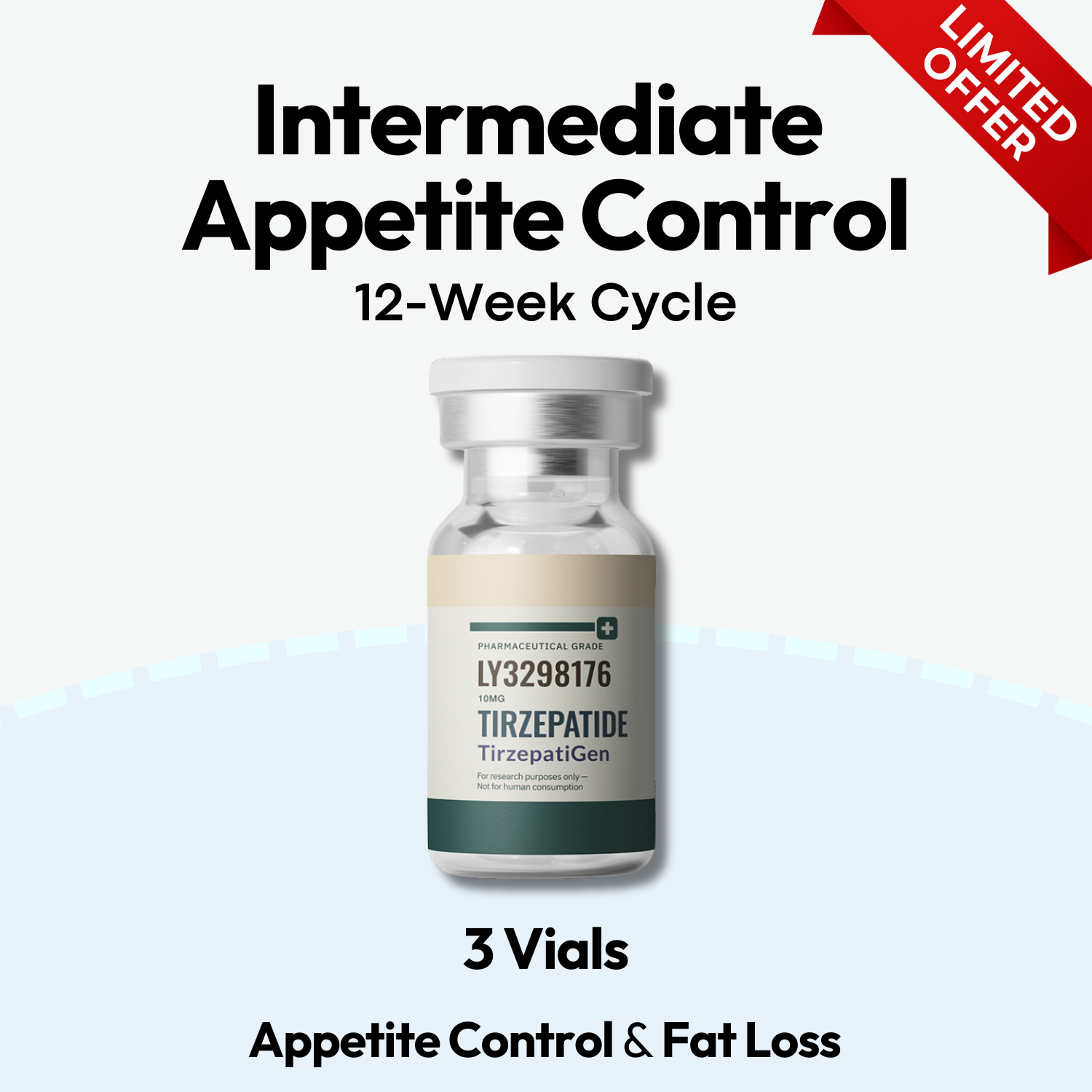
The Appetite Control Research Stack (Tirzepatide) is an intermediate-level formulation commonly selected by research teams seeking to expand beyond single-pathway incretin investigation into dual-pathway metabolic signaling. This stack is structured to support controlled exploration of appetite regulation, energy balance, and metabolic control through coordinated GLP-1 and GIP receptor activity.
By introducing dual incretin signaling, this stack provides a broader research lens compared to entry-level formulations while maintaining a focused appetite-centric framework.
Includes
- 3 vials of Tirzepatide (10 mg each)
Tirzepatide is a compound studied for its metabolic effects. It is designed to interact with two of the body’s natural pathways involved in appetite and blood sugar regulation—the GLP-1 and GIP systems. The dual mechanism is investigated to understand how coordinated signaling may influence metabolic processes.
Within a research framework, this stack is considered an intermediate step. It represents a logical progression after studying single-pathway GLP-1 compounds and before examining more advanced, multi-pathway formulations. The data from this stage helps inform the readiness for further research into complex appetite and metabolic modulation.
This approach provides a look at dual-pathway research, contributing to a foundational understanding of this area of study.
Mechanism and Research Focus
Tirzepatide is studied for its interaction with both GLP-1 and GIP receptors, two incretin pathways closely associated with appetite signaling and metabolic regulation. In structured research models, dual-pathway incretin modulation has been associated with observable differences in satiety signaling markers, energy intake patterns, and downstream metabolic readouts when compared to single-pathway approaches. The coordinated nature of these mechanisms makes this stack particularly relevant for examining synergistic metabolic signaling behavior under standardized laboratory conditions.
Key Research Observations
Research has shown this stack may help support the following in non-clinical models:
- Dual incretin signaling — coordinated GLP-1 and GIP pathway activity observed in controlled experimental settings
- Appetite modulation patterns — altered hunger and satiety signaling markers relative to single-pathway models
- Metabolic efficiency indicators — measurable shifts in energy-related biochemical readouts
- Comparative response analysis — expanded data sets enabling comparison against entry-level incretin research
Form and Handling
Research-grade peptide supplied in lyophilized powder format. Vials are provided individually and aligned to the stack composition. Store frozen at approximately −20 °C and protect from light to maintain compound integrity throughout the research cycle.
Research Use Only
For laboratory research use only. Not for human or animal consumption, medical use, or therapeutic application.


Reviews
There are no reviews yet.