
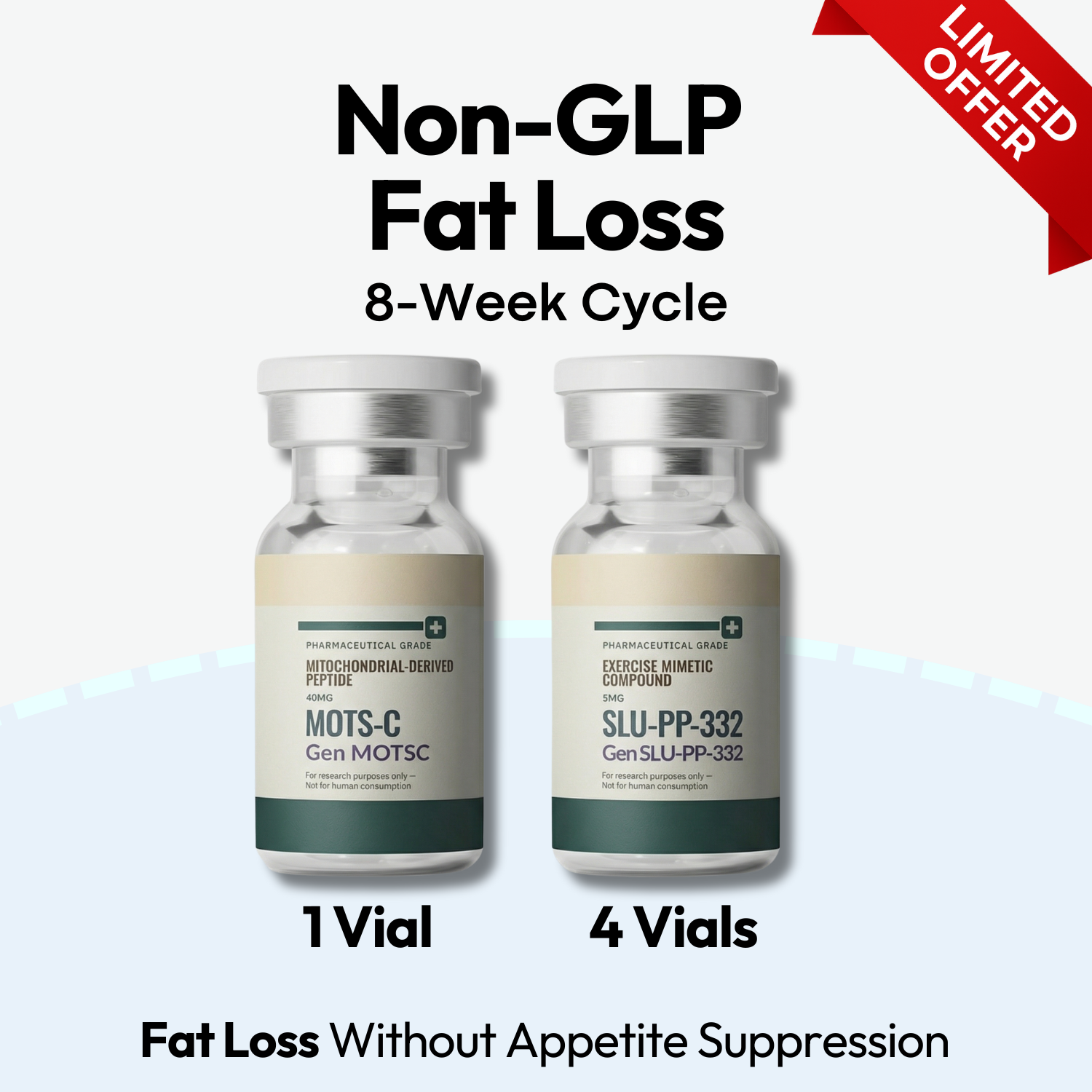

The Non-GLP Fat Loss Research Stack (SLU-PP-332, MOTS-C) is an advanced, non-incretin formulation selected by research teams investigating metabolic rate, mitochondrial efficiency, and cellular energy regulation without direct appetite-suppression pathways. This stack is designed for controlled research environments where metabolic output and energy utilization are examined independently of GLP-1–mediated signaling.
By focusing on intracellular and mitochondrial mechanisms, this formulation offers an alternative research framework for studying fat-loss–related metabolic processes beyond incretin-based models.
Includes
- 4 vials of SLU-PP-332 (5 mg each)
- 1 vial of MOTS-C (40 mg)
This research stack combines two compounds studied for their role in cellular energy and metabolism, focusing on how cells produce and manage fuel.
SLU-PP-332 is investigated for its potential to support mitochondrial function. Mitochondria are often called a cell’s powerplants. This compound is examined for its interaction with specific cellular pathways that may enhance mitochondrial activity and increase the efficiency of burning fats for energy.
MOTS-C is researched as a unique signaling peptide that originates from the mitochondria itself. It is studied for its role in cellular communication, particularly in how cells sense energy availability, adapt to metabolic stress, and regulate overall metabolic balance.
When paired, these compounds allow for a structured investigation into metabolic efficiency from two angles. The stack models how supporting the mitochondria’s machinery (via SLU-PP-332) while simultaneously optimizing the cell’s energy signaling and response systems (via MOTS-C) may work together to influence energy expenditure and metabolic rate. This provides a research framework focused on the cellular foundations of metabolism.
Mechanism and Research Focus
SLU-PP-332 is investigated for its role in activating transcriptional pathways associated with mitochondrial biogenesis and oxidative metabolism. MOTS-C is studied for its involvement in cellular energy regulation, AMPK-related signaling, and metabolic adaptation under energetic stress. In controlled research environments, coordinated observation of these mechanisms provides insight into non-appetite-driven metabolic control and energy expenditure signaling.
Key Research Observations
Research has shown this stack may help support the following in non-clinical models:
- Mitochondrial efficiency signaling — modulation of pathways associated with oxidative metabolism
- Energy expenditure markers — measurable shifts in metabolic output and utilization indicators
- Cellular stress adaptation — observation of metabolic responses under energetic demand
- Non-incretin fat-loss modeling — evaluation of metabolic regulation independent of appetite pathways
Form and Handling
Research-grade peptides supplied in lyophilized powder format. Vials are provided individually and aligned to stack components. Store frozen at approximately −20 °C and protect from light to preserve compound stability throughout the research period.
Research Use Only
For laboratory research use only. Not for human or animal consumption, medical use, or therapeutic application.

Reviews
There are no reviews yet.